
TECHNICAL GUIDE · 2026-11-26
FRP interior wall panels: SMC molding and joint checks
- FRP is a material category; glass-fiber SMC is an intermediate sheet used to mold parts.
- Separate molded-part distortion from installation and bonding problems.
- Confirm joint dimensions and fire performance for the specific wall system.
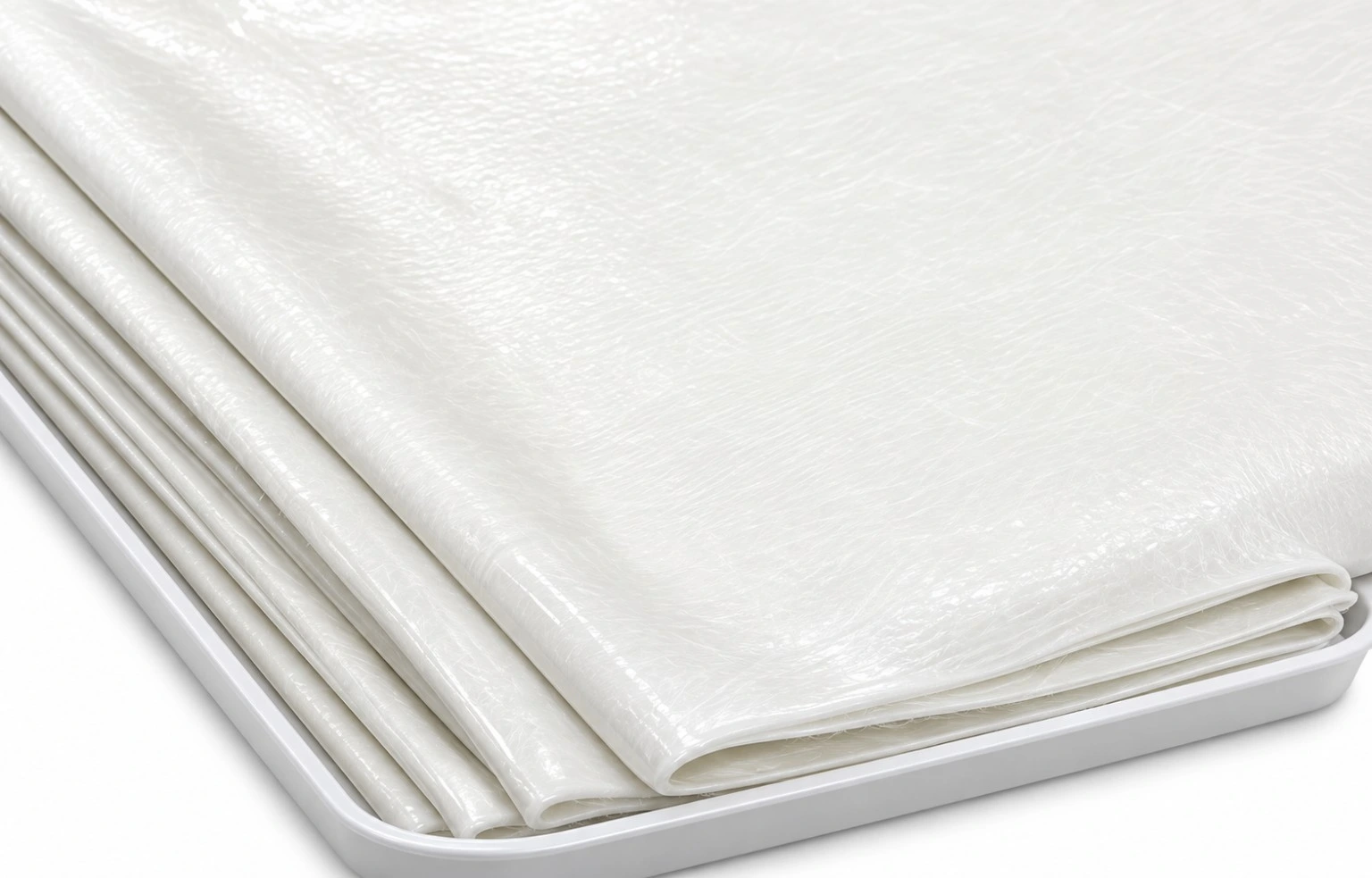
Component and selection question
The component is one non-load-bearing interior wall lining panel. The design and quality question is: what should be checked first when a panel lifts or a joint opens?
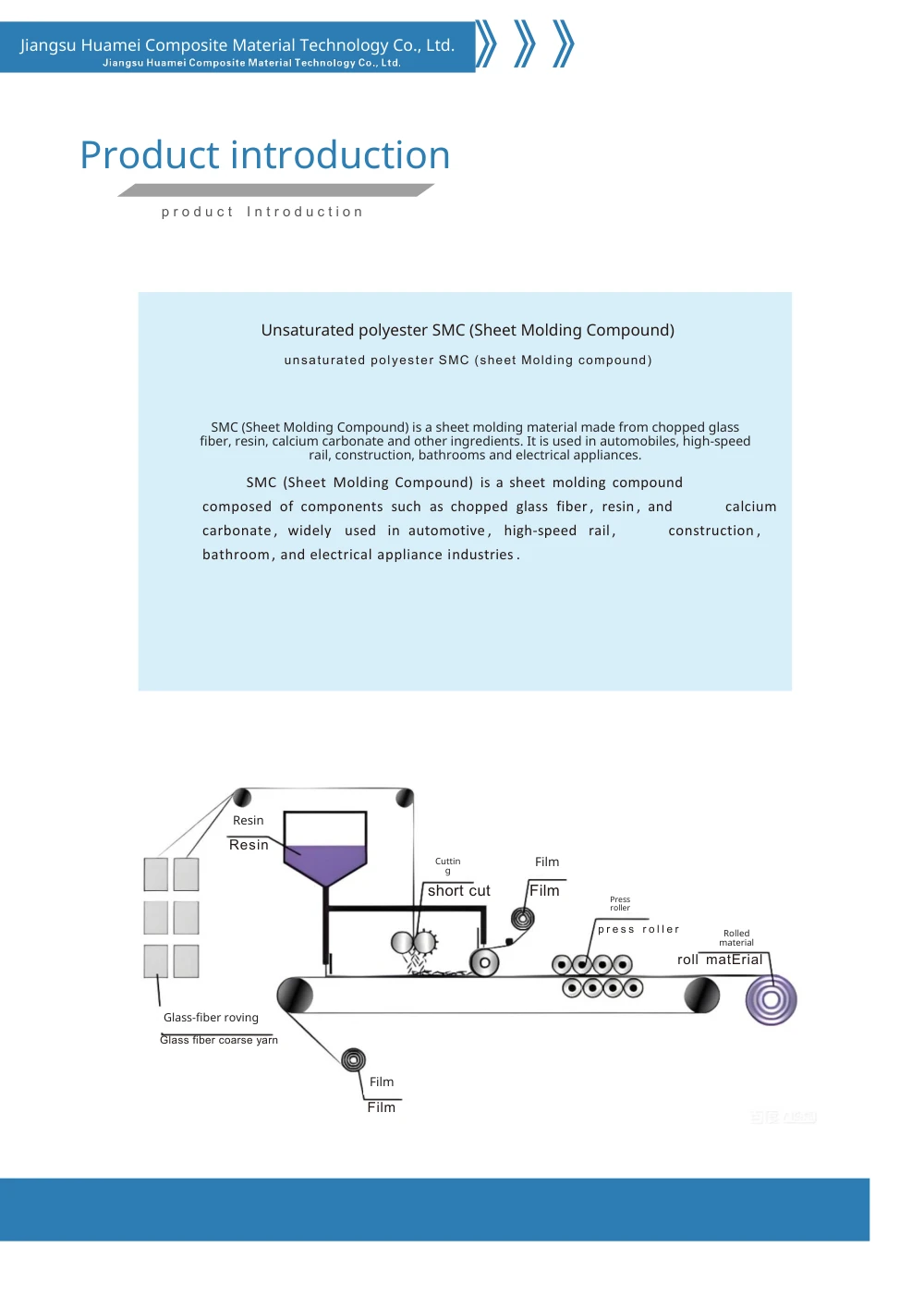
Page 17 of the HUAMEI brochure describes SMC containing unsaturated polyester resin and chopped glass fiber. A panel molded from this material falls within FRP; supplying this intermediate material is distinct from supplying an approved interior wall system.
Record the molding baseline
Review thickness transitions, ribs, mold filling and distortion after cooling. SMC BMC Europe discusses uniform thickness and rib design; its general recommendations are not guaranteed values for a HUAMEI grade.
Record charge location, mass and molding history, then measure datum surfaces and flatness before assembly. Review mold size, press capability and surface requirements before trial molding.
Inspection locations
- Panel: compare flatness before and after installation.
- Joint: check edge clearance, trim interface and seal condition.
- Substrate: check the supporting surface behind the bond layer.
Variable checklist
| Variable | What to check | Required information | Effect on the component |
|---|---|---|---|
| Thickness / ribs | Transitions and surface read-through | Sections and molded-part measurements | Local stiffness and appearance |
| Mold / process | Charge position, mass and batch | Mold drawings and process history | Filling and distortion |
| Substrate / bond | Surface condition and compatibility | Installation and adhesive documentation | Lifting and joint reliability |
| Joints | Clearance and interface geometry | Panel and trim details | Movement restraint and opening |
| Environment | Humidity, temperature and cleaning | Site conditions and surface test plan | Surface and joint condition |
| Fire / validation | Lining versus assembled system | Use-specific requirements and model report | Scope of suitability |
Separate possible causes before repair
- If distortion existed before installation, first review molded dimensions and storage.
- If it appeared later, map the lifted areas and compare substrate, bonding and joint records.
- Marlite addresses substrate preparation, acclimation, movement clearance and wet-area sealing. These are instructions for another system; do not transfer its dimensions, adhesives or methods directly to an SMC panel.
- Before cosmetic repair, define checks for the panel–adhesive–substrate assembly. Agree conditions and acceptance criteria with the designer and applicable product documentation.
Composition evidence is not system performance evidence
The brochure preview supports SMC composition only. It does not establish wall-panel fire, moisture, bond or impact performance, or suitability for Korean building applications. No test report tied to this specific wall model and installation was verified in this review.
Related resources and inquiry
Prepare drawings, panel size and quantity, substrate and joint details, service conditions, required tests and molding equipment. Finished-panel supply capability requires separate confirmation.
SMC · Tests and certification · Downloads · Collaboration & co-development
Sources and review scope
Technical explanation; written and reviewed 2026-11-26. Not an independent experiment or peer-reviewed paper. HUAMEI brochure and SMC BMC Europe webpage issue dates are unstated; the Marlite instructions are effective 2025-01-01. Other manufacturers’ approvals and projects are not HUAMEI evidence.