Sheet format
Select sheet dimensions for cutting and mold charging.

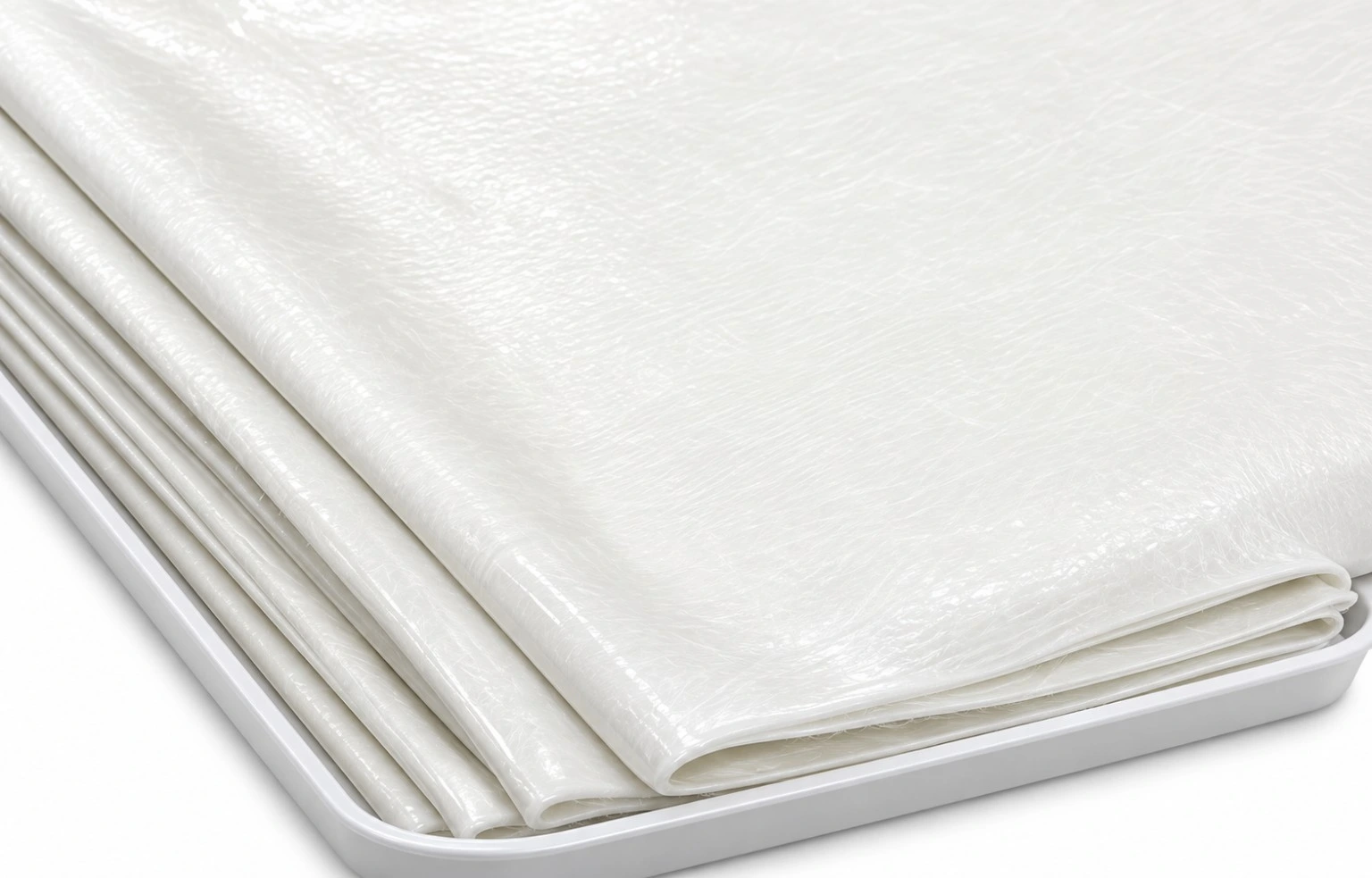
Glass-fiber-reinforced thermoset sheet material. Explore SMC raw material supply and compression molding applications.


 SMC / SHEET MOLDING COMPOUND
 01Raw material mixing02SMC sheet production
 03Heated compression molding
 04Molded components
3D application concepts. Suitability depends on material grade, design and testing conditions.
Concept imagery only. Confirm specifications and performance with technical documentation.
A sheet-form composite combining unsaturated polyester resin and glass fiber. Explore SMC composition, supply specifications, compression molding, applications and quality checks.
SMC · SHEET MOLDING COMPOUND
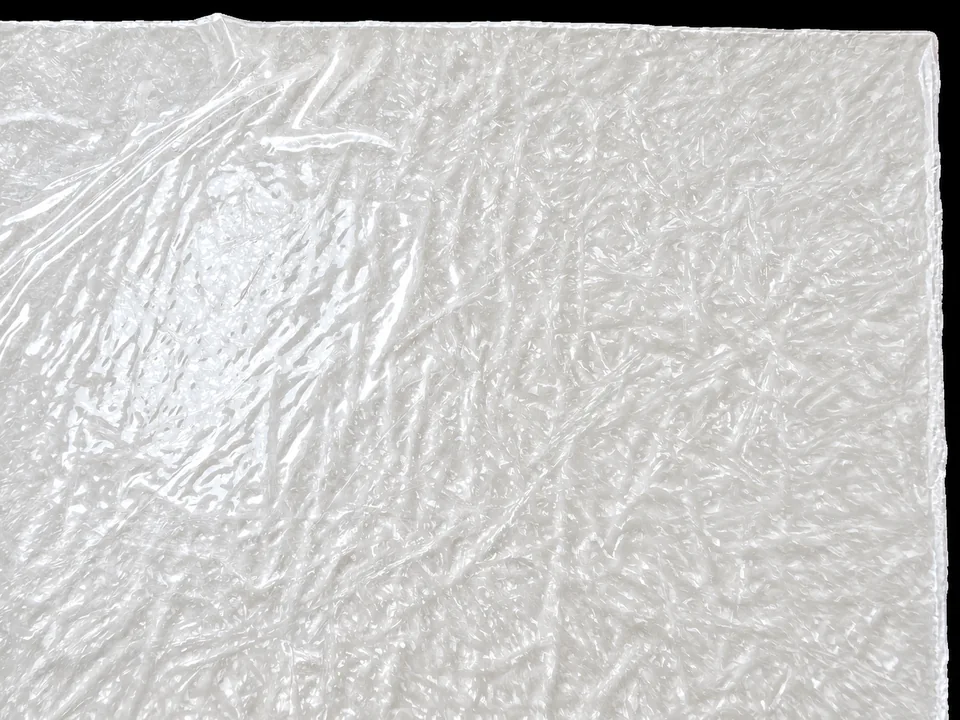
SMC stands for Sheet Molding Compound, also spelled Sheet Moulding Compound. It is a thermoset composite combining a resin system, fiber reinforcement, fillers and additives in sheet form.
HUAMEI describes its SMC as an unsaturated polyester system with chopped glass fiber, calcium carbonate and other constituents. The sheet is cut, placed in a heated mold and compression molded into a part. For a glass fiber SMC sheet quote or sample inquiry, share the intended use, a drawing or part dimensions, target properties, expected quantity and press specifications if available.
01 / COMPOSITION
SMC / MATERIAL DESIGN
Sheet molding compound combining unsaturated polyester resin, chopped glass fiber, calcium carbonate and other constituents. Review geometry, surfaces, joints and exposure conditions for the selected grade.
02 / SELECTION
Select sheet dimensions for cutting and mold charging.
Review part geometry, surfaces and joints alongside mold conditions.
Check evidence for water, electrical, thermal and outdoor requirements.
03 / SUPPLY
Confirm values in the selected grade specification and test documentation. No universal guaranteed values or storage conditions are stated.
The available literature does not provide detailed grade-specific SMC test values. Request the selected product specification and test report.
04 / PROCESS
Confirm mold temperature, pressure and cure time for the formulation, thickness and equipment.
Swipe horizontally to explore the complete production line.
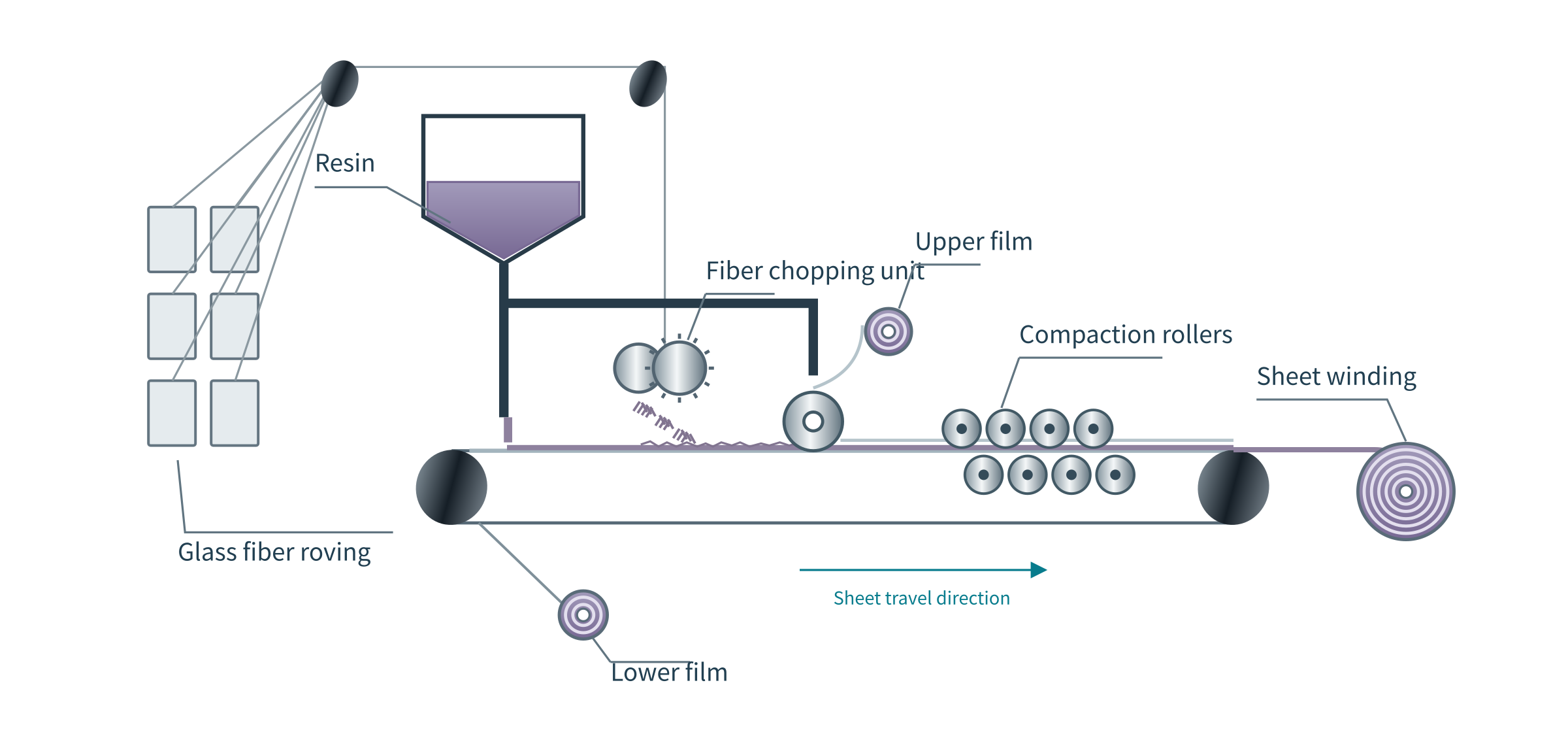
Continuously feed the carrier film.
Apply resin paste to the film.
Distribute chopped glass fibers evenly over the resin layer.
Rollers compact the material stack into sheet form.
Wind the completed composite sheet into a roll.
This diagram describes SMC sheet manufacture, not final-part molding. Depending on the formulation, thickening or maturation follows impregnation. The material is then cut and compression molded in a heated mold. Follow grade-specific maturation, storage and molding instructions.
MOLDED COMPONENTS
Eight sectors per product, with candidate parts and engineering checks. This is a material-selection and development guide, not a HUAMEI delivery record or blanket approval for every grade.
Existing brochure examples for truck parts, bathrooms, tanks and cooling towers are expanded with electrical, charging, battery, door, exterior and infrastructure uses. Drinking-water, fire, electrical and load requirements need grade- and part-specific evidence.
Example partsHigh roofs, bumpers, tailgates, side skirts
Example partsBattery cases, top covers, energy-storage housings
Example partsDistribution cabinets, junction boxes, charger housings, meter covers
Example partsBathroom ceiling, wall and floor panels, shower trays
Example partsModular tank panels, treatment covers, septic inspection lids
Example partsCooling-tower casings, fan guards, service panels
Example partsDoor skins, façade panels, canopy and exterior parts
Example partsDrain covers, cable-trench covers, access covers
External examples use different grades, reinforcements or processes. Confirm the supplied grade against drawings, service conditions, trial molding and component tests.
Industry referencesDiscuss your drawings, quantity and service conditionsImages are schematic diagrams of application fields and do not represent actual delivery cases.
SMC / PERFORMANCE REVIEW
Based on the brochure’s SMC features and applications, these are suggested checks before purchasing or trial molding. They do not indicate that HUAMEI SMC has passed every listed test.
Request MPa/GPa data with specimen thickness, direction and conditioning
Match span, thickness and load direction when assessing panel deflection
Check notch condition, temperature, impact method and failure mode
Assess pull-out, bearing and tightening conditions at holes, ribs and inserts
Compare measured density and molded weight with reference and target values
Check cross-width and batch variation and charge-weight limits
Record flow direction, measurement time, post-cure and drawing tolerances
Check cooled-part flatness, mounting positions and assembly gaps
Specify immersion duration, temperature, conditioning and mass measurement
Check strength, dimensions and appearance after defined exposure
Use actual chemical concentrations, temperatures and durations to assess changes
Define pressure and leakage criteria including joints and seals
Match standard, rating, thickness, color and grade to the report
Check humidity, temperature, voltage and surface versus volume resistance
Compare electrode, thickness and voltage-ramp conditions with design requirements
Compare grade-specific results with contamination and moisture in service
Distinguish loaded test results from continuous service conditions
Check cracks, warpage and joints across defined temperatures and cycle counts
Check color, gloss and retained strength after defined UV and moisture exposure
Assess long-term deformation and damage under actual load and temperature
Agree limits for voids, fiber exposure, color difference and whiteness
Check adhesion, staining and damage using actual coating and cleaning systems
Assess short shots, weld regions and thickness variation against charge and press conditions
Record measurement temperature, storage duration, batch and maturation state
For water supply, separately verify hygiene, migration testing and applicable certification for the intended water contact. The brochure’s food-grade wording alone does not establish drinking-water suitability.
Identify grade and batch, drawing and thickness, loads, temperature, humidity, contact media, target life and required specifications. Request method, specimen conditions, units, test date, laboratory and acceptance criteria. Separate material testing from finished-component validation.
Ask about SMC test data and trial molding06 / CONTACT