
PU COMPOSITE PREPREG / CSFCM
Glass fiber polyurethane prepreg (CSFCM)
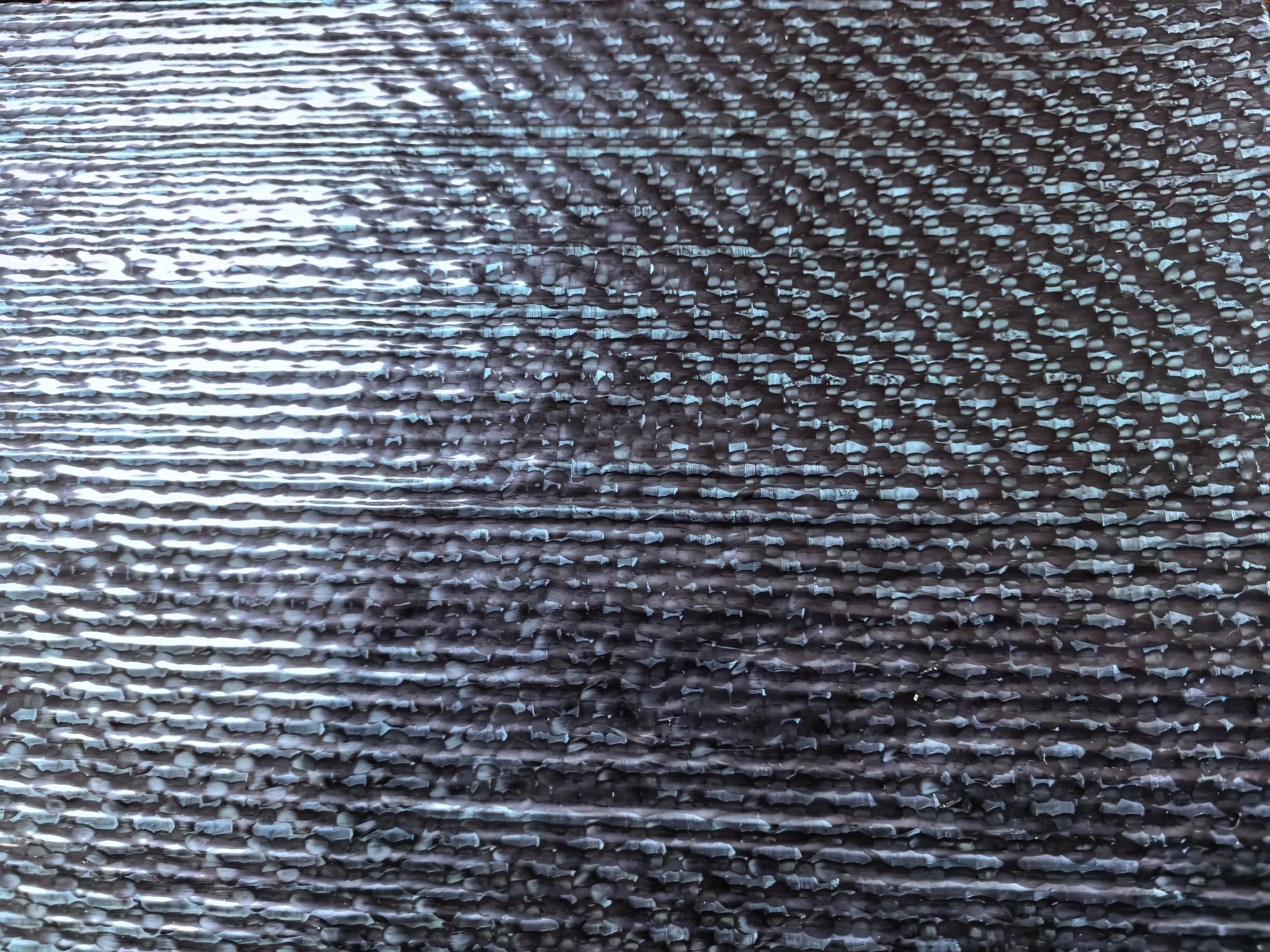
CSFCM is a polyurethane (PU) prepreg reinforced with woven and chopped glass fibers. Review material configurations and molding conditions for your part.
 Composition
 Supply format
 Processing
 Applications
From material selection to part validation
01Material & specifications
02Cutting & placement
03Molding conditions
04Part quality review
Application images illustrate areas for evaluation. Confirm specifications and processing conditions in the product technical data.
Sheet prepreg combining PU resin with glass-fiber reinforcement. Support for material selection and molding-condition review.
01 / MATERIAL & SPECIFICATIONS
CSFCM PU composite prepreg: composition and supply formats
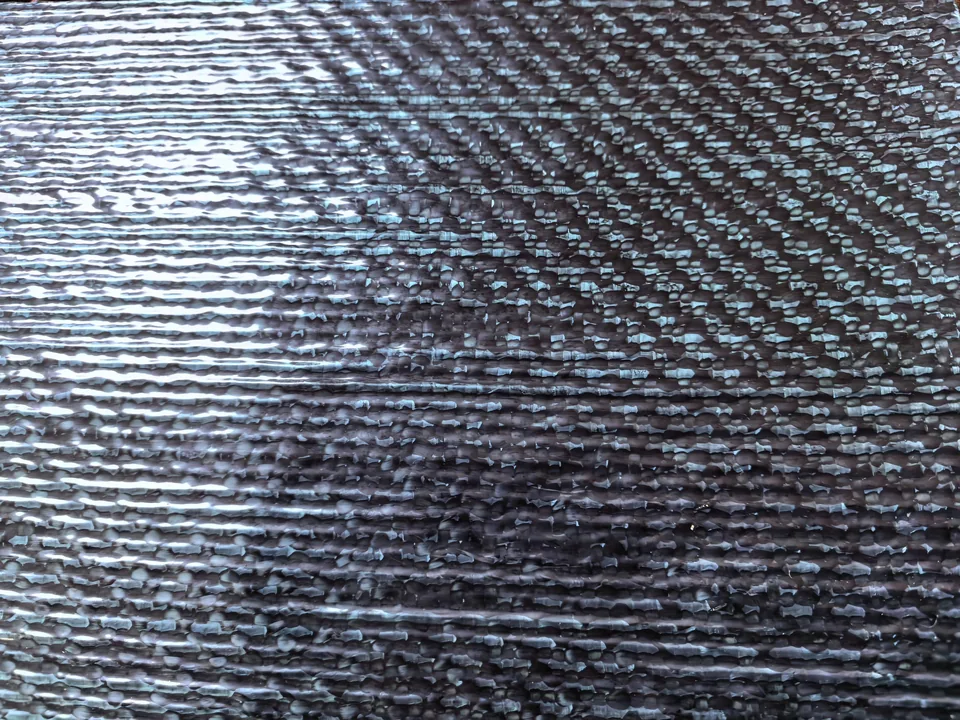
Supply specifications
CSFCMMaterial composition details
Polyurethane resin
Woven reinforcement
Chopped reinforcement
Specification and molding support
Width, thickness and layup review · Sheet cutting and placement · Heated compression molding · Part inspection and evaluation
CSFCM / POLYURETHANE COMPOSITE PREPREG
CSFCM polyurethane composite prepreg
A composite combining polyurethane resin, woven and chopped glass fiber reinforcement, and additives.
01
Material composition
Woven glass fiberPolyurethane resin matrixChopped glass fiber
+Functional additives
02
Key evaluation criteria
Strength
Reinforcing fibers and layup are used to design part strength.
Fire performance
Confirm the rating in the test data for the specific product.
Sealing
Evaluate against part design and service conditions.
Electrical performance
Confirm against the intended use and specifications.
Restricted substance control
Check against customer requirements and applicable criteria.
03 / STRUCTURE OPTIONS
Example layup structures
Conceptual structure diagram. Refer to product specifications and test data for actual materials, layup and performance.
Information for material selection
10 / DEVELOPMENT CHECKPOINTS
Four checks in part development
Translate operating requirements into material specifications and part tests.
Operating environment
Loads, temperature, humidity, chemicals and UV
Material architecture
Fibers, width, thickness, areal weight and layup direction
Molding conditions
Mold design, temperature, pressure, curing, demolding and finishing
Part validation
Dimensions, finish, strength, sealing, environmental durability and standards
02 / PROPERTIES & SELECTION
Properties and assessment points
Review corrosion, weathering, structural, thermal and environmental requirements for the intended use. See Technology & certification for values and test evidence.
CSFCM / 01
Thermal behaviour & material comparison
Reference information for refrigerated-container inner panels, considering thermal bridges, conductivity and dimensional stability.
Thermal-bridge design
Review the inner-panel structure and joints to reduce heat-transfer paths.
Thermal conductivity
The supplied comparison lists 0.34 W/(m·K) for the PU composite.
Long-term insulation
Confirm ageing, moisture and joints through panel-level testing.
Temperature variation
Consider thermal expansion and deformation in the part and joint design.
| Property | Aluminium | PU composite | Nylon thermal break | PVC | Base FRP |
|---|---|---|---|---|---|
| Density (g/cm³) | 2.79 | 2.1 | 1.3 | 1.5 | 1.9 |
| Conductivity [W/(m·K)] | 160 | 0.34 | 0.30 | 0.35 | 0.45 |
| Flexural strength (MPa) | 250 | >1200 | 80–180 | 30 | 300–400 |
| Flexural modulus (GPa) | 50–80 | 41.3 | 2–5 | 2.2–5 | 10–22 |
| Dimensional shrinkage ≤ (%) | 0.6 | 0.2 | 0.4 | 0.4 | 2 |
| Expansion coefficient · source value | 2.2–2.4 | 0.5–0.8 | 2.4–3.5 | 5–8.5 | 0.73 |
Values transcribed from the supplied comparison. Grade, specimens, test methods and comparison conditions are not provided. These are not CSFCM9060 specifications or matched-condition test results. Confirm the expansion-coefficient unit and scale in the original.
Strength analysis
High-efficiency insulation
Low thermal conductivity and over 20% better insulation than conventional materials reduce energy consumption.
Low weight · high strength
Low density and high strength reduce container weight and improve transport efficiency.
Environment · sustainability
Environmentally friendly materials, pollution-free production and recyclability contribute to sustainability.
Durability · reliability
Ageing and corrosion resistance with a long service life reduce maintenance costs.
Development project
Volume approx. 800 LMass approx. 24.5 kg
| PU composite | Load position | Maximum deformation | Maximum stress |
|---|---|---|---|
| PU + glass fibre | Centre | 23.099mm | 129.7MPa |
| PU + glass fibre | Eccentric | 20.319mm | 86.567MPa |
| PU + glass fibre | Corner | 7.3533mm | 97.756MPa |
7.1 Conclusion
Under the pressure-load conditions, all three positions meet strength requirements without a risk of fracture.
Model and method: customer data (20260925 revision-2.STEP). Total mass approx. 24.36 kg; 2600 × 720 × 714 mm.
Key results
Conclusion and recommendation: draft approx. 23.8 mm without a top load; approx. 121.3 mm with an additional 100 kg.
Wording and values reproduce the supplied reference. Geometry and analysis views are SVG redrawings, not original CAD or newly computed results. The conclusion is limited to the reference model and loads.
03 / MOLDING PROCESS
From prepreg sheet to molded component
Cutting, placement and heated compression molding jointly influence dimensions and surface quality.
- 01
Prepare sheets
Select width, thickness and areal weight for the part geometry.
- 02
Cut and lay up
Review reinforcement direction, ply count and mold placement.
- 03
Heat and compress
Apply heat and pressure in the mold to cure and form the part.
- 04
Demold and inspect
Check appearance, dimensions, joints and required properties.
Cure time, cutting and lay-up comparison
| Comparison item | Epoxy prepreg example | PU composite prepreg example |
|---|---|---|
| Material components | Fabric + epoxy resin | Fabric + chopped fiber + PU resin |
| Width | 1,000 / 1,270 mm | 1,000–1,500 mm |
| Thickness | 0.2 / 0.32 mm | 0.6–2.5 mm |
| Cuts at 1.5 mm thickness | 5 cuts | 2 cuts |
| Plies at 1.5 mm thickness | 5 plies | 2 plies |
| Curing time in brochure | 400 s | 200 s |
Compare the production cost per part
Material input × unit price + equipment and labor + finishing + scrap and losses. Assess relative cost and performance claims only after matching grade, part design and production conditions.
04 / APPLICATIONS
Components and application assessment
Application images
Explore component forms and material applications in battery, energy and transport systems.
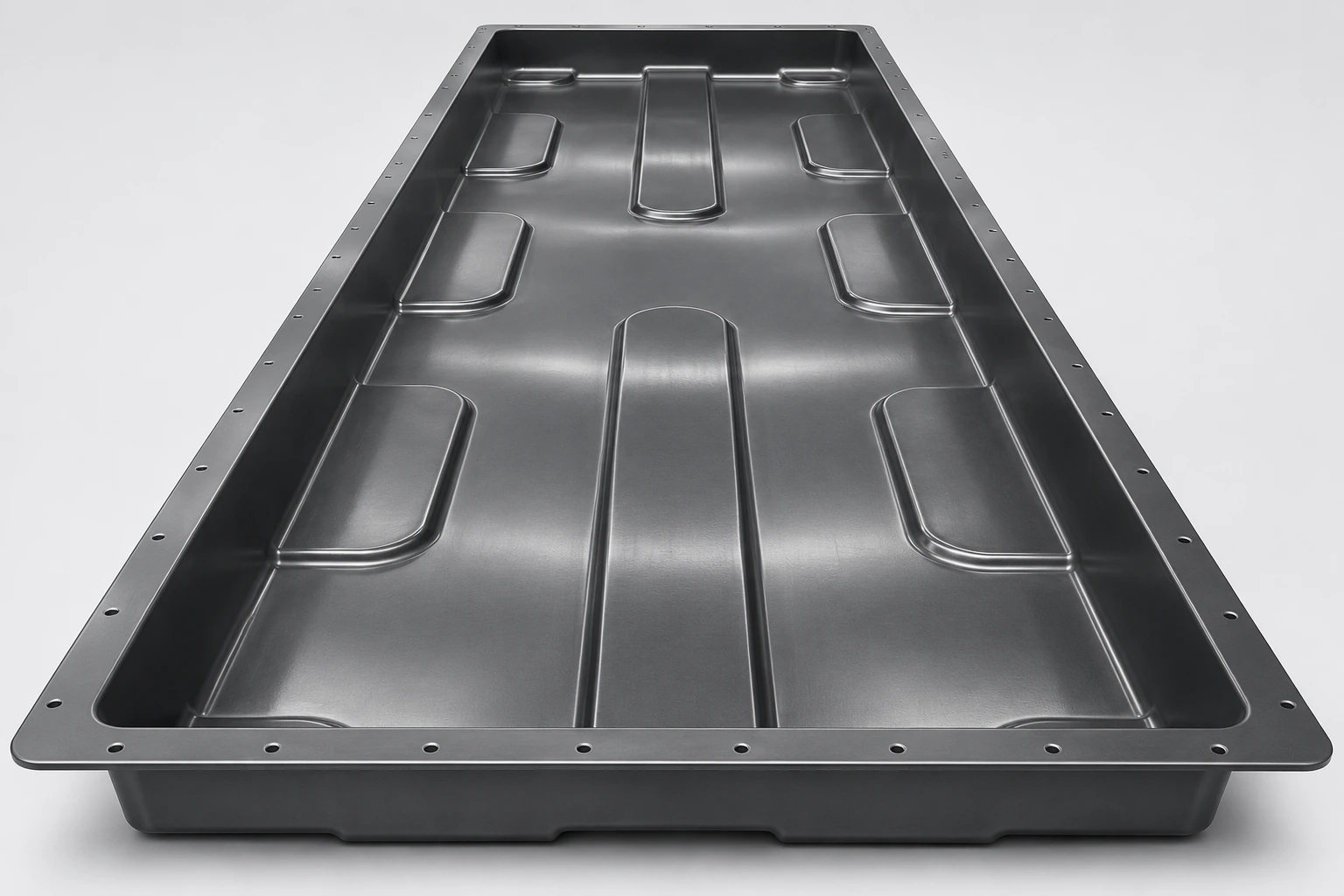
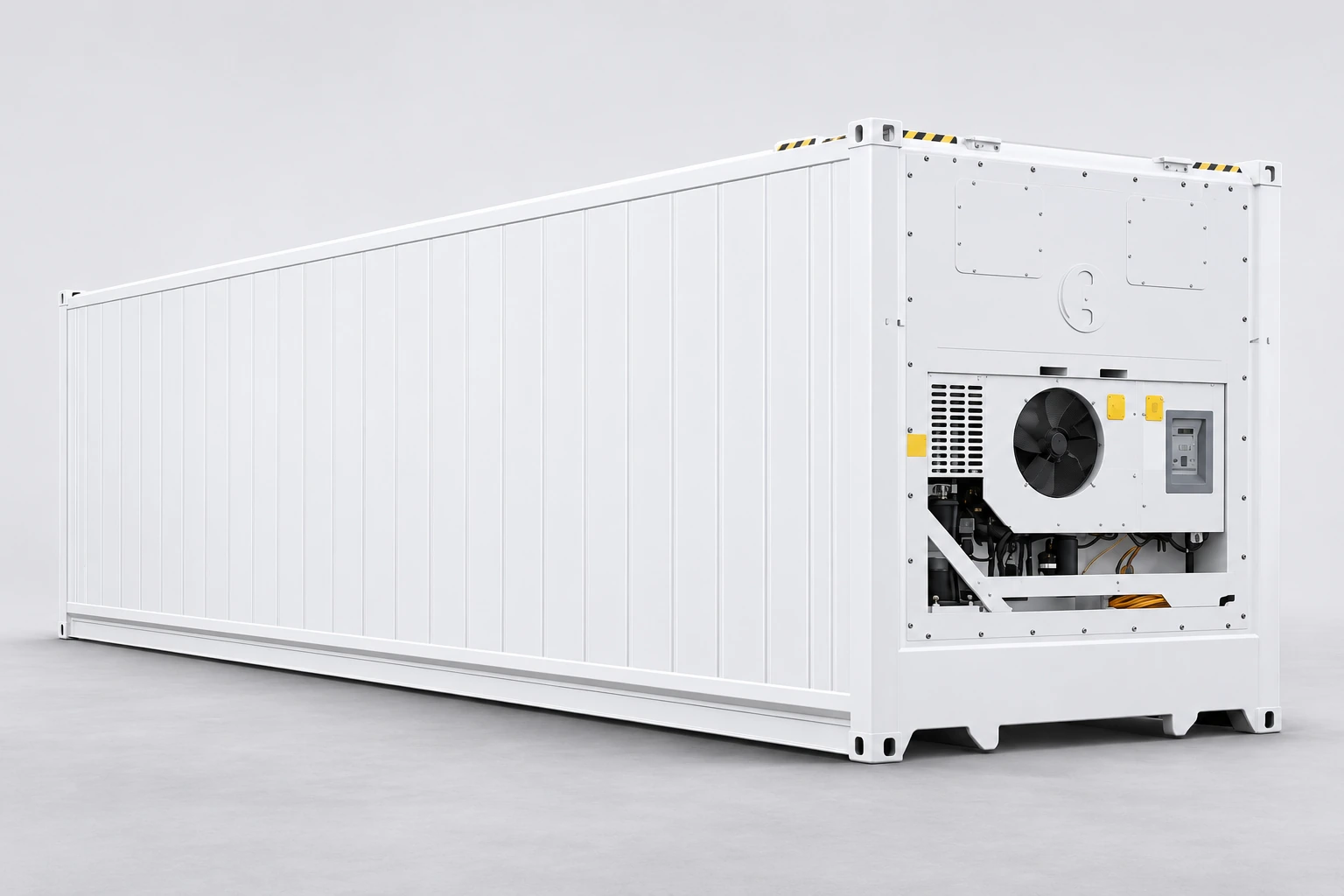
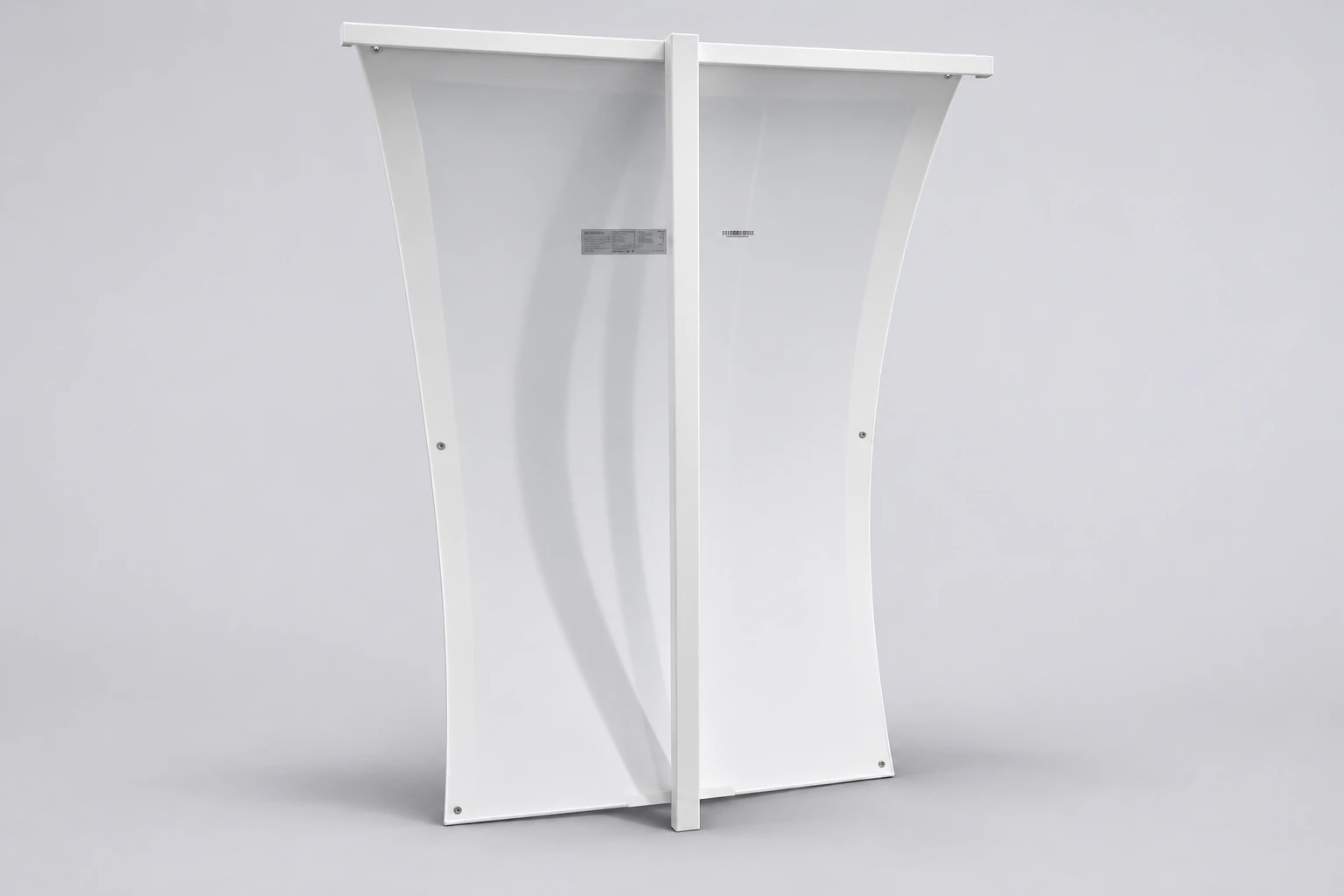
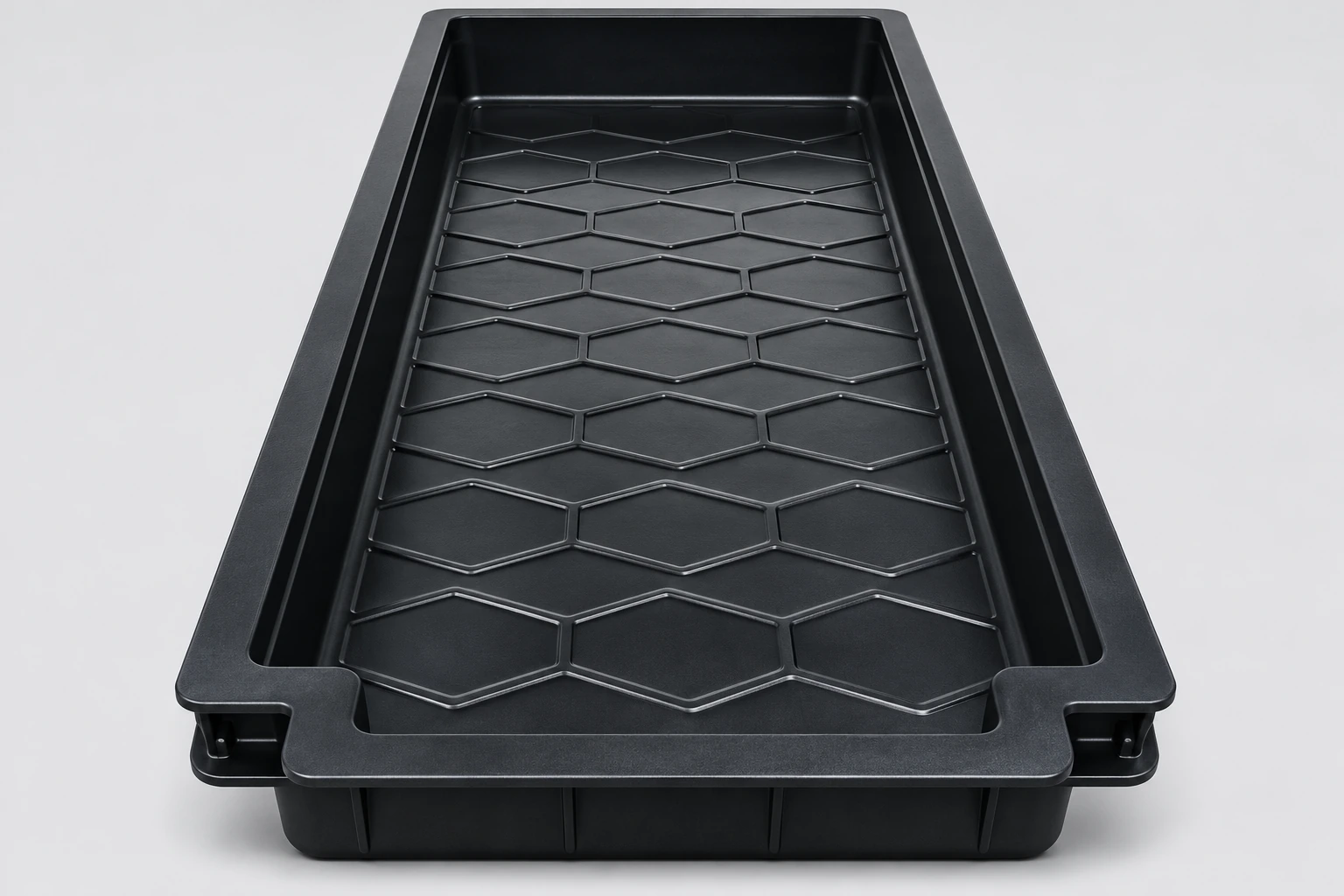
08
Explore a broader range of industries
Eight sectors per product, with candidate parts and engineering checks. This is a material-selection and development guide, not a HUAMEI delivery record or blanket approval for every grade.
The existing PU prepreg brochure includes battery covers, refrigerated liners and PV backsheets; floating/offshore solar and aquaculture development documents were also consulted. Additional sectors are development candidates and require grade confirmation.
01Application screening
EV batteries & energy storage
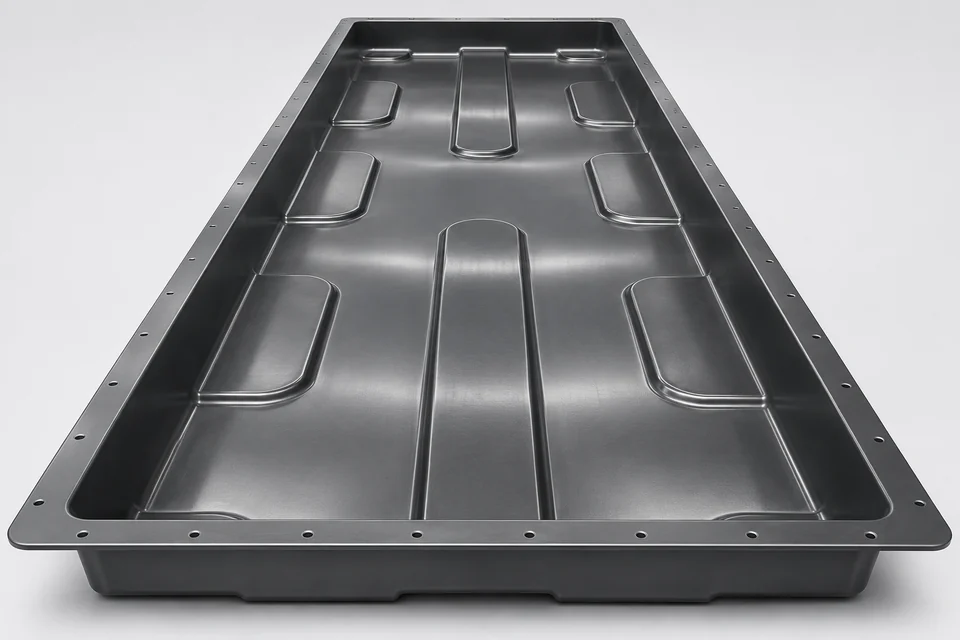
Example partsBattery top covers, underbody protection panels, component covers
- Engineering checks
- Heat, fire, sealing, impact and insulation
02Application screening
Refrigerated transport & cold chain
Example partsRefrigerated body liners, door liners, sandwich panel skins
- Engineering checks
- Cleaning, moisture, bonding, thermal cycling and contact rules
03Application screening
Solar & floating photovoltaics
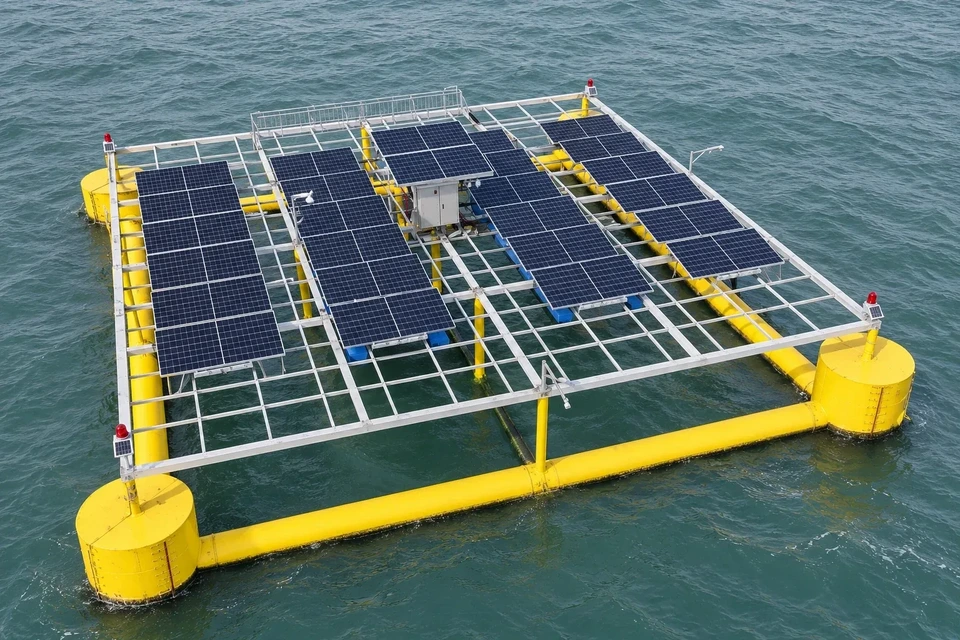
Example partsPV backsheet candidates, float shells, service panels
- Engineering checks
- UV, damp heat, electrical safety, adhesion and moisture
04Application screening
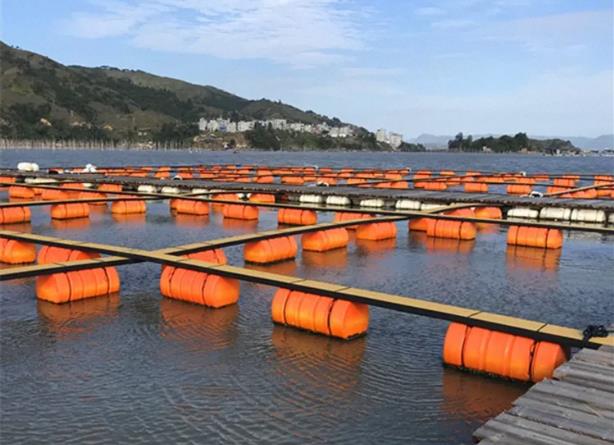
Marine, aquaculture & vessel parts
Example partsAquaculture float shells, deck panels, marine equipment covers
- Engineering checks
- Salt water, sealing, buoyancy design, fatigue and UV
05Application screening
Robotics & automation
Example partsRobot shrouds, gripper support plates, transfer carriers
- Engineering checks
- Stiffness, cyclic load, precision and fastening
06Application screening
Buildings, doors & modular housing
Example partsWall and ceiling skins, modular floor backing, door panels
- Engineering checks
- Fire, UV, wind load, thermal movement and joints
07Application screening
Furniture, interiors & consumer products
Example partsChair shells, tabletop backing, cabinet panels
- Engineering checks
- Surface, scratching, joints, load and emissions
08Application screening
Industrial equipment & lightweight tooling
Example partsMachine covers, handling trays, inspection fixture plates
- Engineering checks
- Dimensions, wear, heat, vibration and chemicals
External examples use different grades, reinforcements or processes. Confirm the supplied grade against drawings, service conditions, trial molding and component tests.
Industry referencesDiscuss your drawings, quantity and service conditionsFind component examples and development directions on the Applications page. Suitability requires grade selection and component validation.
05 / LITERATURE & CONTACT
Literature & contact
Review the literature and tell us about your component and specification needs.
See the relevant technical data for grade specifications and test conditions.
Aquaculture & marine equipment
From material to molded parts. Explore material composition, production considerations and verification for aquaculture walkways and marine equipment.
Explore materials & parts →